



Hardware trends rarely stay confined to their original purpose. In recent years, the cremone bolt (once associated primarily with traditional French doors) has been reinterpreted as a distinctive feature in interior cabinetry.

Interior designers are increasingly specifying cremone bolts for cabinet doors in kitchens, wardrobes and bespoke joinery. The appeal lies in their ability to combine functionality with architectural presence. What was once a practical locking mechanism has become a statement detail, adding vertical emphasis and craftsmanship to contemporary interiors.
For designers seeking hardware that offers both character and performance, cremone bolts present an elegant solution.
The Origins Of The Cremone Bolt
The cremone bolt mechanism originated in 18th-century Europe and was traditionally used to secure tall casement windows and French doors.
Its defining feature is a vertical rod system. A handle positioned centrally on the door operates two metal rods that extend both upwards and downwards, locking the door into the frame at the top and bottom simultaneously.
Historically, this system offered several advantages:
- Secure closure for tall external doors
- A clean, symmetrical appearance
- Reliable mechanical operation
Because the rods run vertically along the door surface, cremone bolts naturally emphasise height and proportion. This architectural quality is part of the reason designers are now rediscovering their value in interior applications.
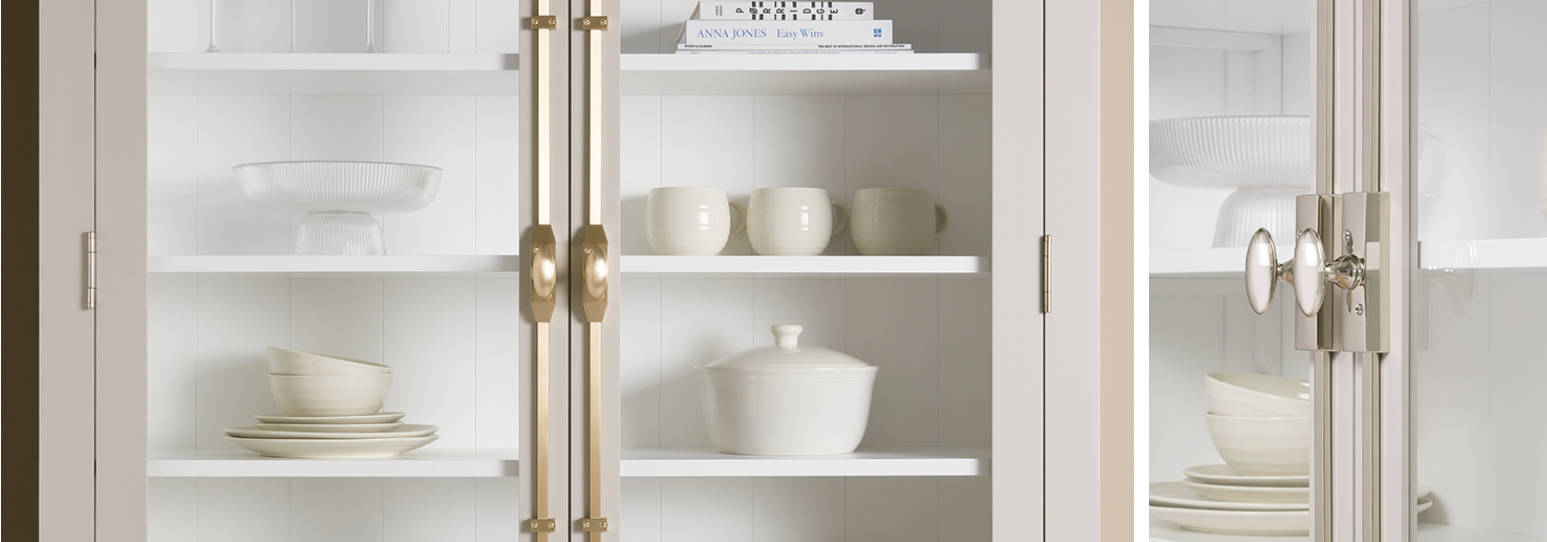
Image Source: Croft
Why Designers Are Bringing Cremone Bolts into Cabinetry?
While originally developed for external doors, they translate remarkably well to bespoke joinery.
Specifying cremone bolt hardware for cabinets allows designers to introduce a visually striking vertical element across cupboard fronts or tall storage units. The rods create structure and rhythm across cabinetry, particularly when repeated across multiple doors.
In kitchens, cremone bolts are increasingly used on:
- Pantry cupboards
- Tall larder cabinets
- Glass-fronted display units
- Freestanding dressers
In wardrobes or bespoke joinery, they can reinforce the architectural scale of full-height doors.
Designers often appreciate how cremone hardware provides both visual interest and practical closure without relying on hidden mechanisms.
Aligning With Current Hardware Trends
The rise of cremone hardware reflects several wider shifts in interior design.
Statement Hardware
Kitchen and cabinetry hardware is becoming more expressive. According to Homes & Gardens, hardware is increasingly viewed as jewellery for the home, with designers opting for bold or distinctive pieces that elevate otherwise simple cabinetry.
Cremone bolts naturally fit this direction. Their elongated form creates a strong design feature while remaining practical.
Heritage Influences In Contemporary Interiors
Heritage-inspired detailing continues to shape modern interiors. Traditional hardware elements are being reinterpreted in contemporary settings, blending historical references with modern materials.
Cremone bolts offer exactly this balance. Their origins are historic, yet their clean lines allow them to integrate comfortably into both classic and modern kitchens.
Mixed Metals And Material Contrast
Interior designers are also experimenting more confidently with mixed metals.
Cremone bolts offer opportunities to introduce subtle material contrast. Brass rods paired with darker cabinetry, for example, can add warmth and depth, while brushed steel versions create a more understated contemporary look.
The Design Benefits Of Cremone Bolts For Cabinets
When thoughtfully specified, cremone bolts for cabinets deliver several design advantages.
Architectural Verticality
Cabinet doors often rely on horizontal lines created by shelves or drawer fronts. Cremone rods introduce vertical emphasis, balancing the composition and drawing the eye upward.
This is particularly effective in tall kitchens where designers want to accentuate ceiling height.
Visual Symmetry
Because cremone hardware is typically centred on the door, it reinforces symmetry across cabinetry. When used across multiple cupboard fronts, the repeating rods create rhythm and order within the design.
Tactile Craftsmanship
Unlike concealed push systems or minimal pull handles, cremone bolts celebrate the mechanics of hardware. The rods, handle and fittings remain visible, highlighting craftsmanship and engineering.
This tactile quality is increasingly valued in high-end interiors where designers want materials and mechanisms to feel authentic.
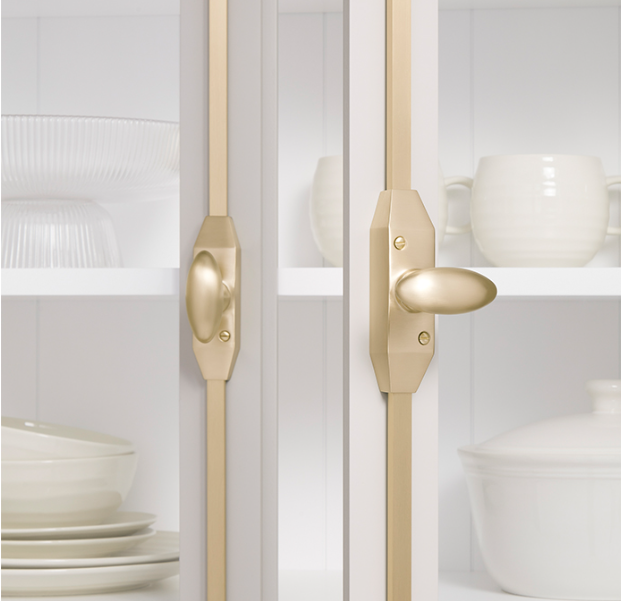
Image Source: Croft
Practical Considerations When Specifying Cremone Bolt Hardware
Although cremone hardware is visually striking, it remains a working mechanism and should be specified carefully.
Interior designers should consider:
- Door thickness and construction to accommodate the rod system
- Material and finish compatibility with surrounding hardware
- Ease of operation for everyday use
- Alignment with cabinetry proportions
In some cases, cremone hardware may operate as a decorative latch rather than a full locking mechanism, depending on how it is integrated into the joinery design.
Working with specialist ironmongery suppliers ensures that the mechanism performs reliably while maintaining the intended aesthetic.
Turning Functional Hardware Into A Design Feature
One of the most compelling aspects of cremone hardware is its ability to transform a practical mechanism into a defining visual element.
Rather than hiding hardware, cremone bolts celebrate it.
For interior designers, this approach aligns with a broader shift towards visible craftsmanship, where hinges, handles and fittings contribute actively to the design language of a space.
When used thoughtfully, cremone bolt hardware for cabinets can introduce subtle drama without overwhelming the cabinetry. It provides just enough detail to elevate joinery while preserving the overall design balance.
A Detail That Adds Character
Cremone bolts demonstrate how even familiar mechanisms can take on new relevance when viewed through a contemporary design lens.
Once associated primarily with French doors, they are now finding a place in kitchens, wardrobes and bespoke cabinetry across modern homes.
By combining heritage character with functional clarity, cremone bolts for cabinet doors offer interior designers a way to introduce vertical emphasis, craftsmanship and architectural interest within joinery.
It is a reminder that sometimes the most compelling design statements come from reinterpreting traditional details.
Request A Sample
At Opitome, we work closely with interior designers to source and specify architectural ironmongery that enhances both functionality and design intent. If you would like to explore cremone hardware for an upcoming project, you can request a sample. Seeing and handling the hardware first-hand is often the best way to understand how these details can transform cabinetry.

Image Source: Frank Allart
History Of Door Handles: How A Simple Detail Shaped Design History
Why Even The Smallest Door Handle & Hinges Details Can Make A Difference?
No Comments Yet
Let us know what you think