---
title: The Process Behind Hand-Crafted Ironmongery
description: This article explores how hand-chiselled brass ironmongery is crafted, and why its textured finish enhances high-end and heritage interiors.
image: https://www.opitome.co.uk/hubfs/The-Art-Of-Hand-Crafted-Ironmongery-The-Process-Behind%201.png
---
[](https://www.opitome.co.uk/)
[](https://www.opitome.co.uk/)
- About
- [About Us](https://www.opitome.co.uk/about-us)
- [Meet The Team](https://www.opitome.co.uk/meet-the-team)
- Design Services
- [Hardware](https://www.opitome.co.uk/architectural-design-hardware)
- [Handles](https://www.opitome.co.uk/bespoke-door-handle)
- [Door Knobs](https://www.opitome.co.uk/luxury-door-knobs)
- [Cabinet Handles](https://www.opitome.co.uk/architectural-cabinet-handles)
- [Window Hardware](https://www.opitome.co.uk/luxury-window-hardware)
- [Wardrobe Hardware](https://www.opitome.co.uk/wardrobe-rail)
- [Inspiration](https://www.opitome.co.uk/inspiration)
- Interior Styles
- [Classic Styles](https://www.opitome.co.uk/classic-styles)
- [Timeless Period](https://www.opitome.co.uk/timeless-period)
- [Art Deco](https://www.opitome.co.uk/art-deco)
- [Georgian Hardware](https://www.opitome.co.uk/georgian-hardware)
- [Halliday + Baillie](https://www.opitome.co.uk/halliday-baillie)
- Resources
- [Blog](https://www.opitome.co.uk/blog)
- [Downloads](https://www.opitome.co.uk/downloads)
- [Contact Us](https://www.opitome.co.uk/contact-us)
- [Sustainability](https://www.opitome.co.uk/sustainability)
- [FAQs](https://www.opitome.co.uk/frequently-asked-questions)
[](https://www.opitome.co.uk/hs/cta/wi/redirect?encryptedPayload=AVxigLIRcts2efI3Nvsd5CAH9SIwSOlfbl4IPosrRXakz26G96bubJK7S8AEgTfX4JZF7ISB8uBOUBGNE1kPB97mEbKjHfLy8DU9GXHC3JYK1KmR3p4Qr4OVAC2E4%2Bg2nuM%2F%2FENJZ2eSYKV4ldkiO%2F9KErfBfwLnVXoVwejPtBBfLKloc%2BWZFmBMJe7YzchDCc8nDJzRvpIF9hWVAp%2FWHw%3D%3D&webInteractiveContentId=315719321802&portalId=146364361)
[](https://www.opitome.co.uk/hs/cta/wi/redirect?encryptedPayload=AVxigLIRcts2efI3Nvsd5CAH9SIwSOlfbl4IPosrRXakz26G96bubJK7S8AEgTfX4JZF7ISB8uBOUBGNE1kPB97mEbKjHfLy8DU9GXHC3JYK1KmR3p4Qr4OVAC2E4%2Bg2nuM%2F%2FENJZ2eSYKV4ldkiO%2F9KErfBfwLnVXoVwejPtBBfLKloc%2BWZFmBMJe7YzchDCc8nDJzRvpIF9hWVAp%2FWHw%3D%3D&webInteractiveContentId=315719321802&portalId=146364361)
[](https://www.opitome.co.uk/hs/cta/wi/redirect?encryptedPayload=AVxigLIRcts2efI3Nvsd5CAH9SIwSOlfbl4IPosrRXakz26G96bubJK7S8AEgTfX4JZF7ISB8uBOUBGNE1kPB97mEbKjHfLy8DU9GXHC3JYK1KmR3p4Qr4OVAC2E4%2Bg2nuM%2F%2FENJZ2eSYKV4ldkiO%2F9KErfBfwLnVXoVwejPtBBfLKloc%2BWZFmBMJe7YzchDCc8nDJzRvpIF9hWVAp%2FWHw%3D%3D&webInteractiveContentId=315719321802&portalId=146364361)
- About
- [About Us](https://www.opitome.co.uk/about-us)
- [Meet The Team](https://www.opitome.co.uk/meet-the-team)
- Design Services
- [Hardware](https://www.opitome.co.uk/architectural-design-hardware)
- [Handles](https://www.opitome.co.uk/bespoke-door-handle)
- [Door Knobs](https://www.opitome.co.uk/luxury-door-knobs)
- [Cabinet Handles](https://www.opitome.co.uk/architectural-cabinet-handles)
- [Window Hardware](https://www.opitome.co.uk/luxury-window-hardware)
- [Wardrobe Hardware](https://www.opitome.co.uk/wardrobe-rail)
- [Inspiration](https://www.opitome.co.uk/inspiration)
- Interior Styles
- [Classic Styles](https://www.opitome.co.uk/classic-styles)
- [Timeless Period](https://www.opitome.co.uk/timeless-period)
- [Art Deco](https://www.opitome.co.uk/art-deco)
- [Georgian Hardware](https://www.opitome.co.uk/georgian-hardware)
- [Halliday + Baillie](https://www.opitome.co.uk/halliday-baillie)
- Resources
- [Blog](https://www.opitome.co.uk/blog)
- [Downloads](https://www.opitome.co.uk/downloads)
- [Contact Us](https://www.opitome.co.uk/contact-us)
- [Sustainability](https://www.opitome.co.uk/sustainability)
- [FAQs](https://www.opitome.co.uk/frequently-asked-questions)
[](https://www.opitome.co.uk/hs/cta/wi/redirect?encryptedPayload=AVxigLIRcts2efI3Nvsd5CAH9SIwSOlfbl4IPosrRXakz26G96bubJK7S8AEgTfX4JZF7ISB8uBOUBGNE1kPB97mEbKjHfLy8DU9GXHC3JYK1KmR3p4Qr4OVAC2E4%2Bg2nuM%2F%2FENJZ2eSYKV4ldkiO%2F9KErfBfwLnVXoVwejPtBBfLKloc%2BWZFmBMJe7YzchDCc8nDJzRvpIF9hWVAp%2FWHw%3D%3D&webInteractiveContentId=315719321802&portalId=146364361)
[](tel:123-456-7890)
Opitome Ltd, The Busworks, 39-41 North Road,, London, N7 9DP
T: [+44 20 33 277911](tel:%20#+44%2020%2033%20277911)
F: [+44 20 33 277910](tel:%20#+44%2020%2033%20277910)
[Ironmongery](https://www.opitome.co.uk/blog/tag/ironmongery)[Hand-Crafted](https://www.opitome.co.uk/blog/tag/hand-crafted)
# The Art Of Hand-Crafted Ironmongery: The Process Behind
by [Opitome](https://www.opitome.co.uk/blog/author/opitome)
4 min read
Mar 5, 2026, 10:00:00 AM
In a world where precision engineering and efficiency dominate production, there is something quietly compelling about [hardware that is treated as an object of art.](https://www.opitome.co.uk/architectural-design-hardware)Hand-crafted ironmongery, particularly finely chiselled decorative handles and fittings, belongs to a tradition where time, skill and surface are valued as highly as function. These pieces are not defined by speed or repetition, but by patience, control and an almost sculptural approach to detail.
[](https://www.opitome.co.uk/hs/cta/wi/redirect?encryptedPayload=AVxigLIV4tTGi7DpirpiGydmtQsAox3WQwFpXtRFI3046KP7YU9yw0rjUvxBqkIRQDNFuyWy4srTffVFFU6U8HCREw0Wi9gMuwdKVfWPSZvCmIjB4ccjvT%2B3lVIYOr%2BYz9viYlVr8n4wxSmyjYdPh7Q7DK3cDFipV3jiYtB1DOjjVlf4liLMjdzsG1gCNjAwi%2FZ1OcflDMVMY6UPKqe5&webInteractiveContentId=262677618908&portalId=146364361)
This article explores the process behind [hand-chiselled ironmongery,](https://www.opitome.co.uk/blog/beauty-of-british-made-ironmongery) focusing on the artistry that transforms cast brass into richly textured, expressive architectural details. It examines how polishing, chiselling and hand-finishing elevate a functional object into a tactile focal point, and why this approach continues to resonate within high-end residential and heritage-led interiors.
## **From Cast Form To Refined Surface**
Unlike forged or blacksmith-made hardware, hand-forged ironmongery begins its life as a cast object. The base form, typically solid brass, is produced through traditional casting methods that establish the handle’s overall shape, proportion and weight. At this stage, the piece is structurally complete, but visually unresolved.
The base surface is then meticulously polished by hand. This preparatory stage is crucial. Polishing removes casting marks, refines edges and creates a clean, even foundation upon which the work can begin. It is a slow and careful process that ensures the surface is receptive to chiselling, allowing detail to be added with precision rather than force.
Only once the form has been fully refined does the true hand-crafted process begin.
## **The Precision Of Hand-Chiselling**
Using fine chisels and engraving tools, skilled artisans work directly into the polished brass surface, carving patterns, textures and motifs by hand. This process demands an extraordinary level of control. Each cut is permanent, each movement deliberate.
Unlike machine engraving, which produces uniform results, hand-chiselling introduces subtle variation. Lines deepen and soften, patterns breathe, and light interacts unevenly across the surface. This is not decoration applied on top of an object, but a detail embedded within it.
The time investment is significant. A single handle can require many hours of focused work, with the artisan returning repeatedly to refine depth, balance and rhythm. The result is a surface that feels alive, responsive and richly layered, qualities that cannot be replicated through automated processes.
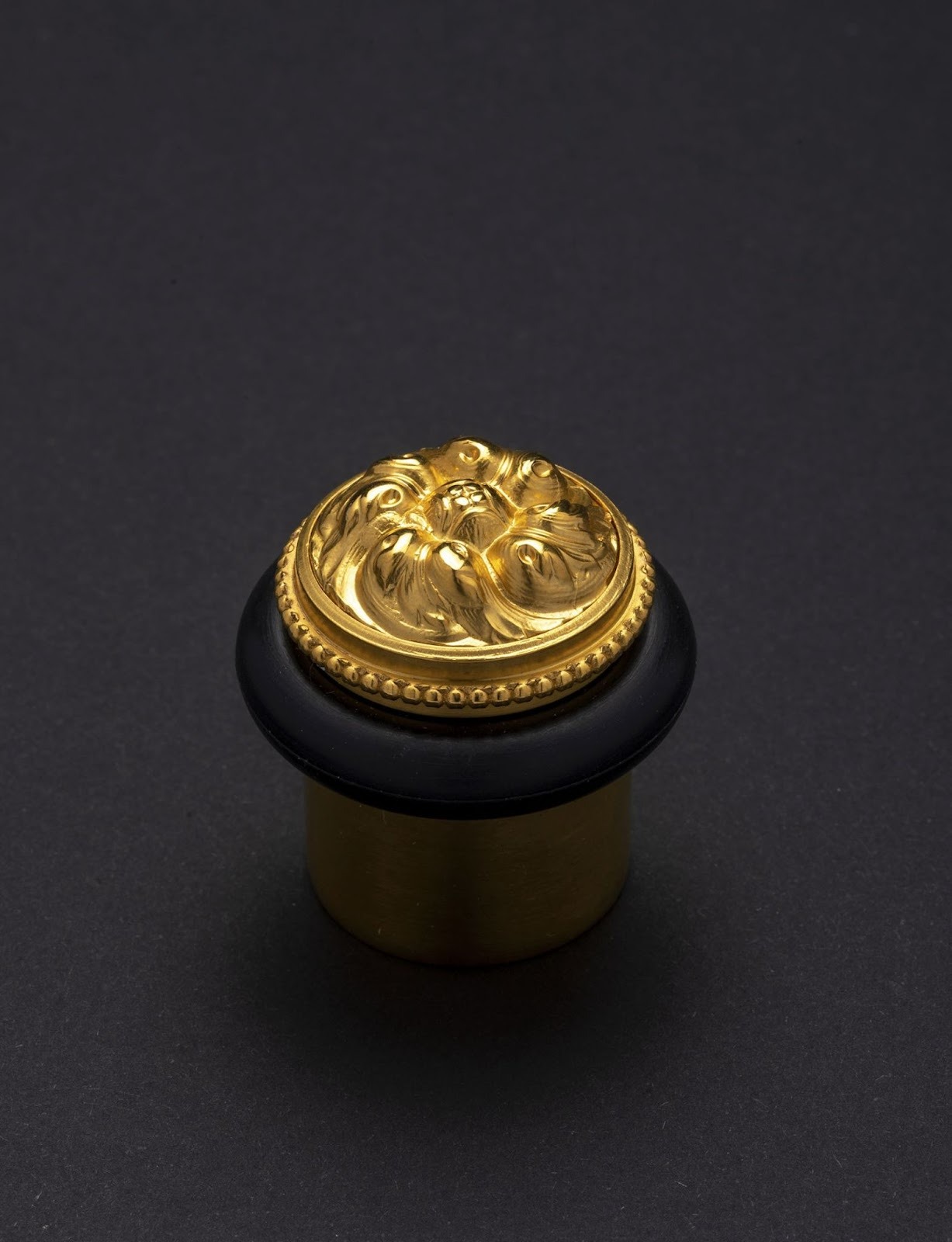
Image Source: [Remy Garnier](https://www.remygarnier.fr/en/modele/butoir-4472/)
## **Surface, Light And Tactility**
One of the defining characteristics of hand-crafted ironmongery is how it responds to light and touch. The carved surface catches light differently across its form, creating depth and movement even when the piece itself remains visually restrained.
This interaction between surface and light gives hand-finished ironmongery a sculptural quality. In interiors where materials are carefully curated, natural stone, fine timber, plaster finishes, these handles add a layer of visual and tactile richness without overwhelming the space.
For interior designers, this is where the appeal lies. Hand-chiselled hardware introduces detail at close range, rewarding interaction rather than demanding attention. It elevates doors and joinery through texture and craftsmanship rather than scale or ornament.
## **A Continental Tradition Of Decorative Hardware**
The heritage behind this type of ironmongery is rooted largely in continental European craftsmanship. Makers in Belgium, France and beyond have long treated [architectural hardware](https://www.opitome.co.uk/architectural-design-hardware) as an extension of decorative arts, producing handles that sit comfortably alongside fine furniture, metalwork and sculpture.
These traditions prioritise proportion, surface and finish, often drawing inspiration from historic architectural detailing while remaining adaptable to contemporary interiors. The result is hardware that feels timeless rather than period-specific, capable of enhancing both classical settings and modern spaces with equal confidence.

Image Source: [Remy Garnier](https://www.remygarnier.fr/en/modele/rosette-3340/)
## **Hand-Finished Ironmongery In Contemporary Design**
Although richly detailed, hand-chiselled ironmongery is not limited to traditional interiors. When used selectively, it can introduce contrast and warmth within minimalist or contemporary schemes.
A [hand-crafted brass handle](https://www.opitome.co.uk/blog/brass-bronze-hardware-finishes-reflect-season) on a clean, architectural door can become a moment of quiet tension, precision against ornament, smooth plane against textured surface. This balance is particularly effective in high-end residential projects, where restraint and individuality are carefully measured.
Rather than feeling ornate, these pieces often read as intentional and considered, an expression of material craft within an otherwise pared-back environment.
## **Time As A Design Value**
Perhaps the most important quality of hand-crafted ironmongery is time. Time invested in making. Time is evident in the surface. Time implied in longevity.
These pieces are designed to age, to develop patina, and to remain relevant long after trends shift. Choosing hand-chiselled hardware is a statement of intent. It signals that details matter, that materials are respected, and that the experience of touch is as important as visual composition.
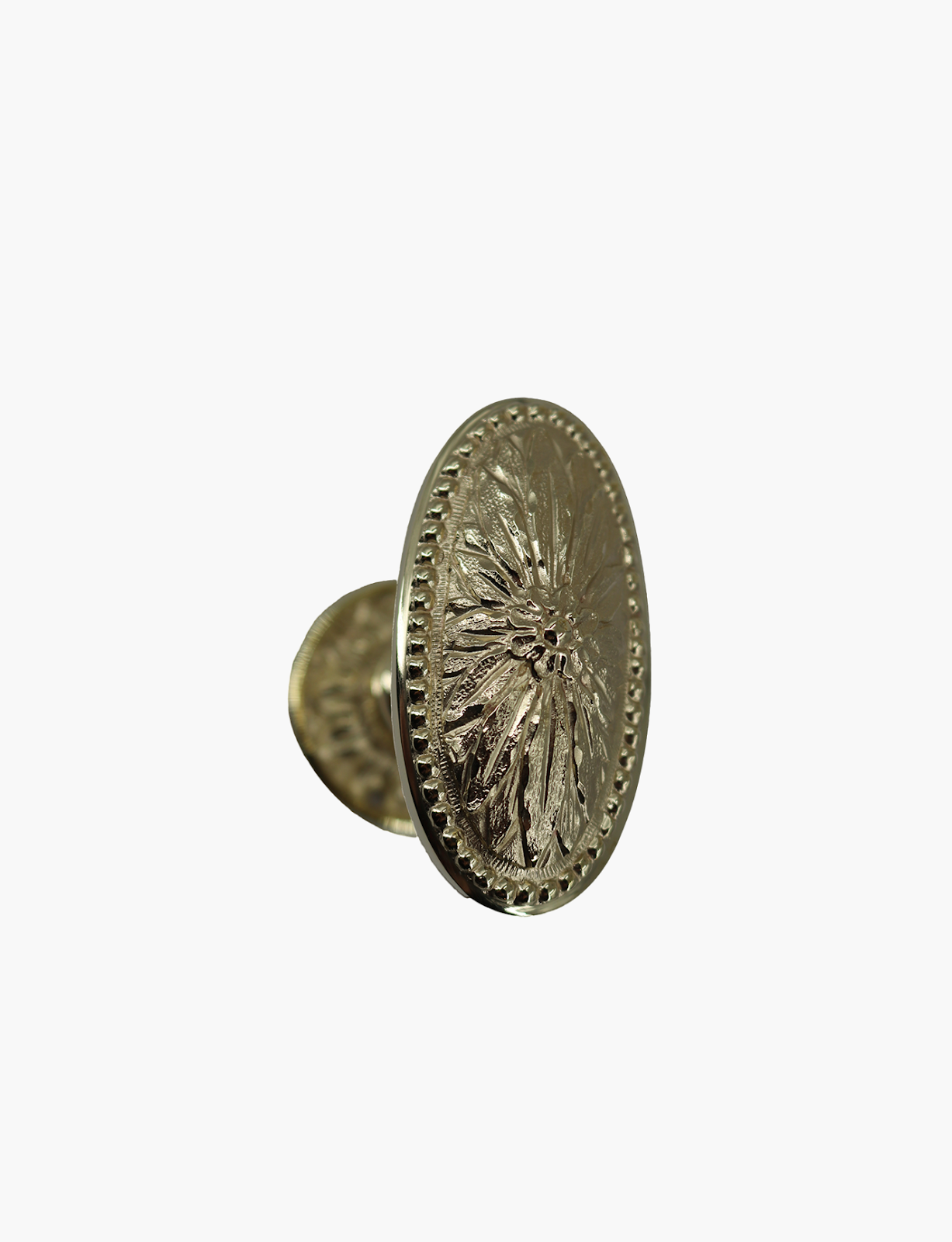
Image Source: [Bronzes De France](https://www.bronzesdefrance.com/en/produits/doors-and-windows/knob/bouton-6-louis-xvi/)
## **Craftsmanship That Transcends Function**
At its best, hand-crafted ironmongery transcends its functional role. It becomes part of the architectural narrative, a detail that connects maker, material and space through care and intention.
For interior designers seeking pieces that offer depth, individuality and enduring quality, hand-finished ironmongery provides a rare opportunity to introduce true artistry at the most intimate points of interaction within a building.
If you would like to explore how hand-crafted, hand-chiselled ironmongery could enhance your next project, Opitome works closely with interior designers to source and specify specialist hardware that reflects craftsmanship, integrity and design sensitivity. You can [book a discovery call](https://www.opitome.co.uk/book-a-discovery-call?hsCtaAttrib=246444506313) with our team to discuss your project in more detail.
[](https://www.opitome.co.uk/hs/cta/wi/redirect?encryptedPayload=AVxigLIwsDAu6Negrer4nXnw%2FVvnewDaIvr%2FPFnqRGsLkPWrA2bLJDwvxlMJNZ784ajCCKHELDbImAY88A27IALLNmZETRo1G5yJlBmQxBqmi6mLSTK%2F9bxnFeB0dAfitLi%2FC0HxWTis7vhY2DRUaCdbUbxnmBAzHUkLwtbjnKcbTL95G72ycHgRIcEf0TJiyXGRD3diJnEqBuPtZkF5FjBtgW4AS9jktMZw%2BSC0AJRGKfPfxiwWP6UmFGzCgoDpDW1Xxw%3D%3D&webInteractiveContentId=262677621987&portalId=146364361)
Image Source: [Vervloet](https://www.opitome.co.uk/hubfs/Louis%20XVI%20388%20by%20Vervolet.webp)
- Recent
- Topics
- Archive
Recent
Topics
- [Door Handles (12)](https://www.opitome.co.uk/blog/tag/door-handles)
- [Hardware Finishes (7)](https://www.opitome.co.uk/blog/tag/hardware-finishes)
- [Ironmongery (7)](https://www.opitome.co.uk/blog/tag/ironmongery)
- [Cabinet hardware (5)](https://www.opitome.co.uk/blog/tag/cabinet-hardware)
- [British-Made (2)](https://www.opitome.co.uk/blog/tag/british-made)
- [Hand-Crafted (2)](https://www.opitome.co.uk/blog/tag/hand-crafted)
- [Brass (1)](https://www.opitome.co.uk/blog/tag/brass)
- [Bronze (1)](https://www.opitome.co.uk/blog/tag/bronze)
- [Hardware Concierge (1)](https://www.opitome.co.uk/blog/tag/hardware-concierge)
- [Oliver Knights (1)](https://www.opitome.co.uk/blog/tag/oliver-knights)
See all
Archive
- [September 2026 (3)](https://www.opitome.co.uk/blog/archive/2026/09)
- [August 2026 (2)](https://www.opitome.co.uk/blog/archive/2026/08)
- [July 2026 (2)](https://www.opitome.co.uk/blog/archive/2026/07)
- [June 2026 (3)](https://www.opitome.co.uk/blog/archive/2026/06)
- [May 2026 (4)](https://www.opitome.co.uk/blog/archive/2026/05)
- [April 2026 (1)](https://www.opitome.co.uk/blog/archive/2026/04)
- [March 2026 (5)](https://www.opitome.co.uk/blog/archive/2026/03)
- [February 2026 (4)](https://www.opitome.co.uk/blog/archive/2026/02)
- [January 2026 (2)](https://www.opitome.co.uk/blog/archive/2026/01)
- [November 2025 (1)](https://www.opitome.co.uk/blog/archive/2025/11)
- [September 2025 (1)](https://www.opitome.co.uk/blog/archive/2025/09)
See all
### Subscribe by email
Share this
[Share on X](https://x.com/intent/post?url=https://www.opitome.co.uk/blog/art-of-hand-crafted-ironmongery-process&text=The+Process+Behind+Hand-Crafted+Ironmongery) [Share on Facebook](https://www.facebook.com/sharer/sharer.php?u=https://www.opitome.co.uk/blog/art-of-hand-crafted-ironmongery-process&t=The+Process+Behind+Hand-Crafted+Ironmongery) [Share on LinkedIn](https://www.linkedin.com/shareArticle?mini=true&url=https://www.opitome.co.uk/blog/art-of-hand-crafted-ironmongery-process&t=The+Process+Behind+Hand-Crafted+Ironmongery)
Previous story
[← Croft’s Latest Collection Of British-Made Hardware](https://www.opitome.co.uk/blog/crofts-latest-collection-british-made-hardware)
Next story
[Handle Vs Knob: Finding The Right Detail For Your Cabinetry →](https://www.opitome.co.uk/blog/handle-vs-knob-right-detail-cabinetry)
## You May Also Like
These Related Stories
[Why Designers Are Using Cabinet Hardware to Introduce Texture and Contrast ?](https://www.opitome.co.uk/blog/cabinet-hardware-texture-contrast-interior-design)

[Cabinet hardware](https://www.opitome.co.uk/blog/tag/cabinet-hardware)
### Why Designers Are Using Cabinet Hardware to Introduce Texture and Contrast ?
Sep 10, 2026, 11:00:00 AM 3 min read
[History Of Door Handles: How A Simple Detail Shaped Design History](https://www.opitome.co.uk/blog/history-of-door-handles)
[Door Handles](https://www.opitome.co.uk/blog/tag/door-handles)
### History Of Door Handles: How A Simple Detail Shaped Design History
Jan 14, 2026, 10:00:00 AM 4 min read
[Materials That Age Beautifully: The Appeal Of Patinated Architectural Hardware](https://www.opitome.co.uk/blog/patinated-contemporary-hardware-design-materials)
[Door Handles](https://www.opitome.co.uk/blog/tag/door-handles)
### Materials That Age Beautifully: The Appeal Of Patinated Architectural Hardware
Jul 23, 2026, 11:00:01 AM 3 min read
### Get Email Notifications
### No Comments Yet
Let us know what you think

Opitome Ltd, The Busworks, 39-41 North Road, London, N7 9DP
T: [0808 502 2881](tel:%200808%20502%202881)
E: [curious@opitome.co.uk](mailto:curious@opitome.co.uk)
VAT Number: 175 4946 69
Company Number 8701538
About
- [About us](https://www.opitome.co.uk/about-us)
- [Contact us](https://www.opitome.co.uk/contact-us)
- [Sustainability](https://www.opitome.co.uk/sustainability)
Design services
- [Hardware](https://www.opitome.co.uk/architectural-design-hardware)
- [Handles](https://www.opitome.co.uk/bespoke-door-handle)
- [Door Knobs](https://www.opitome.co.uk/luxury-door-knobs)
- [Cabinet Handles](https://www.opitome.co.uk/architectural-cabinet-handles)
- [Window Hardware](https://www.opitome.co.uk/luxury-window-hardware)
- [Wardrobe Rail Hardware](https://www.opitome.co.uk/wardrobe-rail)
Interior Styles
- [Classic Styles](https://www.opitome.co.uk/classic-styles)
- [Timeless Period](https://www.opitome.co.uk/timeless-period)
- [Art Deco](https://www.opitome.co.uk/art-deco)
- [Georgian hardware](https://www.opitome.co.uk/georgian-hardware)
Resources
- [Inspiration](https://www.opitome.co.uk/inspiration)
- [Halliday + Baillie](https://www.opitome.co.uk/halliday-baillie)
- [Blog](https://www.opitome.co.uk/blog)
- [FAQs](https://www.opitome.co.uk/frequently-asked-questions)
Copyright © 2026 Opitome Ltd. Designed & developed by [JDR Group](http://www.jdrgroup.co.uk)
- [Terms](https://146364361.hs-sites-eu1.com/terms-and-conditions)
- [Privacy](https://146364361.hs-sites-eu1.com/privacy-policy)
- [Cookie](https://146364361.hs-sites-eu1.com/cookie-policy)
```json
{
"@context" : "https://schema.org",
"@type" : "LocalBusiness",
"address" : {
"@type" : "PostalAddress",
"addressCountry" : "UK",
"addressLocality" : "London",
"postalCode" : "N7 9DP",
"streetAddress" : "The Busworks, 39-41 North Road"
},
"alternateName" : "Opitome Ltd",
"contactPoint" : {
"@type" : "ContactPoint",
"areaServed" : "GB",
"availableLanguage" : "en",
"contactType" : "customer service",
"telephone" : "0808 502 2881"
},
"geo" : {
"@type" : "GeoCoordinates",
"latitude" : 51.5497,
"longitude" : -0.1186
},
"image" : "https://www.opitome.co.uk/hs-fs/hubfs/Opitome%20white%20logo.webp",
"logo" : "https://www.opitome.co.uk/hs-fs/hubfs/Opitome%20white%20logo.webp",
"name" : "Opitome Ltd",
"openingHours" : [ "Mo 08:30-17:00", "Tu 08:30-17:00", "We 08:30-17:00", "Th 08:30-17:00", "Fr 08:30-17:00", "Sa Closed", "Su Closed" ],
"priceRange" : "£",
"sameAs" : [ "https://www.instagram.com/opitome_ltd/", "https://uk.linkedin.com/company/opitome-ltd" ],
"telephone" : "0808 502 2881",
"url" : "https://www.opitome.co.uk/"
}
```
```json
{
"@context" : "https://schema.org",
"@type" : "BlogPosting",
"author" : {
"@type" : "Organization",
"name" : "Opitome Ltd",
"url" : "https://www.opitome.co.uk/"
},
"dateModified" : "2026-03-05",
"datePublished" : "2026-03-05",
"description" : "This article explores how hand-chiselled brass ironmongery is crafted, and why its textured finish enhances high-end and heritage interiors.",
"headline" : "The Process Behind Hand-Crafted Ironmongery",
"image" : "https://146364361.fs1.hubspotusercontent-eu1.net/hubfs/146364361/The-Art-Of-Hand-Crafted-Ironmongery-The-Process-Behind%201.png",
"mainEntityOfPage" : {
"@id" : "https://www.opitome.co.uk/blog/art-of-hand-crafted-ironmongery-process",
"@type" : "WebPage"
},
"publisher" : {
"@type" : "Organization",
"logo" : {
"@type" : "ImageObject",
"url" : "https://www.opitome.co.uk/hs-fs/hubfs/Opitome%20white%20logo.webp"
},
"name" : "Opitome Ltd"
}
}
```