



Interior designers understand that the most impactful details in a space are often the ones the client barely notices. Contemporary design concepts increasingly rely on visual restraint. The focus has shifted towards uninterrupted surfaces, continuous shadow gaps and a seamless flow of materials.

Within this refined aesthetic, the role of traditional ironmongery is changing. Heavy backplates and prominent fixings interrupt clean architectural lines. This is why we're seeing a significant rise in the specification of minimalist door hardware.
A door hardware rose is the circular or square plate that sits behind a door knob or lever handle, attaching it to the door surface. Historically, this component was large and highly decorative.
Today, the objective is entirely different.
Designers look for ways to reduce the visual weight of these fittings. By stripping back unnecessary elements, the focus returns to the fundamental relationship between the handle, the door and the user.
The Shift Towards Visual Restraint
The architecture of contemporary living spaces favours simplicity.
High ceilings, flush-fitting doors and shadow gap skirting boards create an environment where every architectural intervention must be carefully considered.
In these spaces, standard handles often feel intrusive.
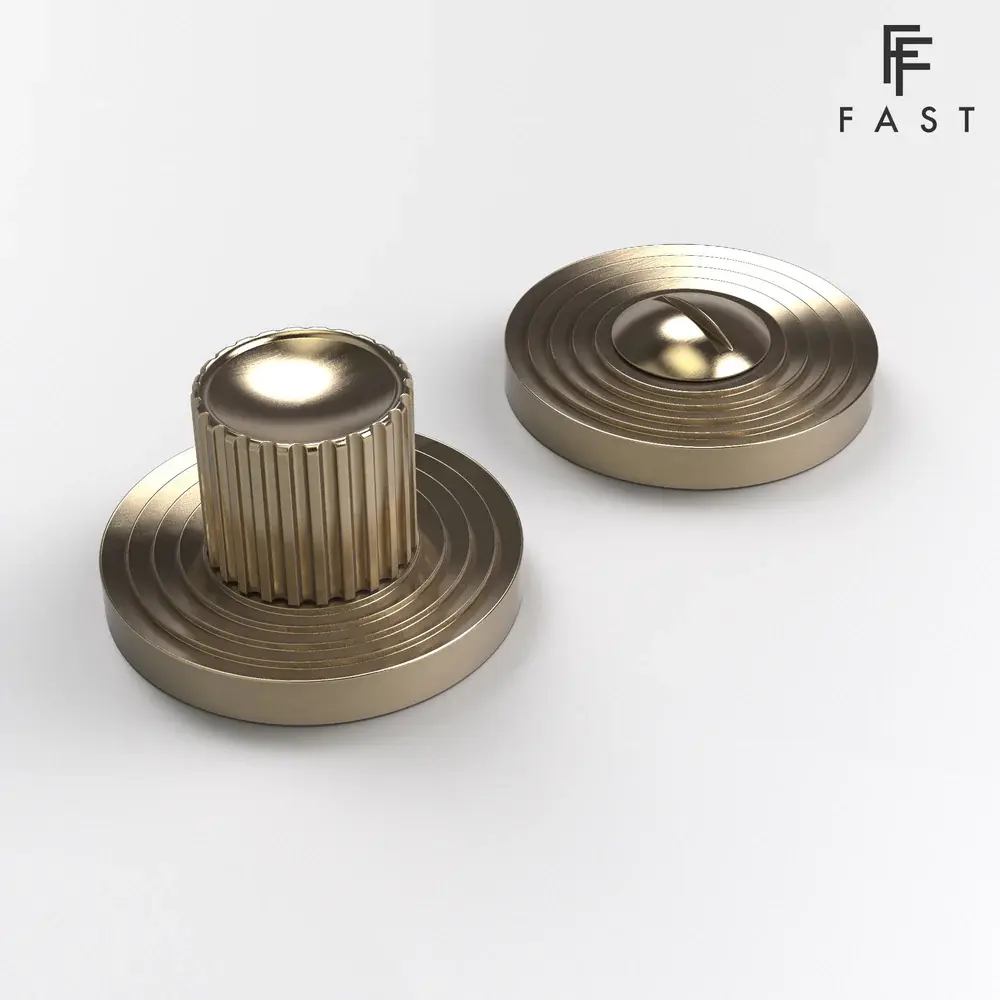
A reduced door hardware rose provides a clear solution to this design challenge. By shrinking the diameter of the rose to a mere few millimetres beyond the handle shank, the hardware sits unobtrusively against the timber. It serves as a functional necessity, blending seamlessly into the background. This approach works particularly well on flush or frameless doors, where the intention is for the door itself to blend into the surrounding wall finish. The handle appears to float independently, creating a clean aesthetic that respects the original design vision.
Engineering the Unseen
The success of minimalist door hardware relies heavily on precision engineering. To create a smaller external footprint, the internal mechanisms must be exceptionally well-designed. The challenge involves maintaining structural integrity and smooth operation while completely hiding the engineered moving components.
The Mechanics of Concealed Fixings
Concealed fixings are an essential part of this process. There are no visible screws to distract the eye. Instead, the rose features a threaded design or a hidden grub screw that locks the cover plate securely into place.
This requires exact tolerances during the manufacturing process. When you specify precision-made fittings, you ensure that the handle operates flawlessly without needing a large, supportive backplate. The lever returns firmly to its horizontal resting position every single time, supported by a heavy-duty sprung mechanism hidden entirely within the door structure.
Allowing Materials to Take Precedence
When you remove decorative flourishes from your door hardware, the quality of the base material becomes the primary focus. A smaller door hardware rose forces the eye to appreciate the tactile qualities of the lever. There is nowhere to hide poor casting or rushed finishing.
This is why material selection is incredibly critical in contemporary ironmongery. A handle crafted from solid brass or bronze carries a specific weight and temperature that communicates true craftsmanship the moment it's touched. By reducing the visual noise around the handle, these material qualities take precedence.
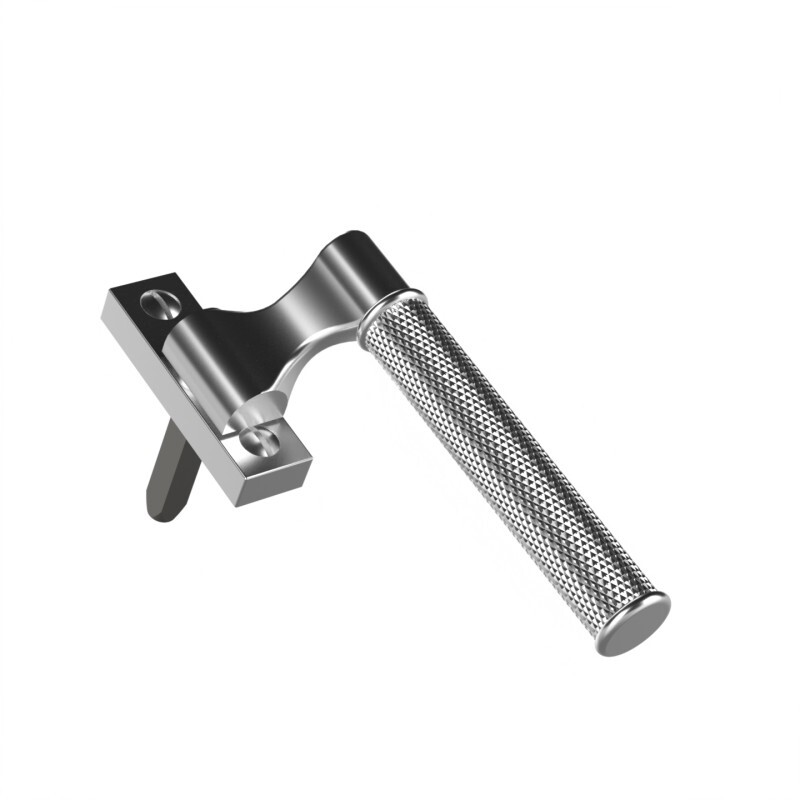
Designers and clients alike can appreciate the subtle variations in a living patina or the exact crispness of machine knurling. The hardware becomes a tactile interaction. It allows the natural beauty of the metals to contrast beautifully against natural oak, dark walnut or painted joinery.
Cohesive Detailing in Contemporary Projects
Achieving continuity is one of the hardest aspects of residential interior design. A home should tell a story. It should feel connected from the front entrance through to the private living spaces. Using restrained door hardware helps you build this cohesive narrative.
Because a minimal rose is inherently simple, it adapts easily to different environments within the same property. A clean, round rose looks just as appropriate on a solid set of double doors in a formal dining room as it does on a discreet bathroom door. This versatility allows you to maintain a consistent language of ironmongery throughout the entire project. You can vary the handle styles to suit the specific function of each room while keeping the fixing method identical. This level of considered detailing elevates the entire interior scheme.
Specifying the Right Door Hardware
Selecting the correct ironmongery for a project requires more than simply reviewing a spec sheet. You need to understand how the lever feels in the hand, how the mechanism operates and how the finish reacts to light.
The interaction between the user and the door is, after all, one of the most frequent physical touchpoints in any building.
We work closely with designers and architects to ensure every component specified meets exact project requirements. Our focus is always on providing clear, practical advice and exceptionally crafted fittings that stand the test of time. To experience the weight, proportion and finish of our minimal rose designs, we encourage you to physically review the materials.
Request a sample directly from our team to see how these refined details can enhance your next interior project.
Image Source: Croft
Why Even The Smallest Door Handle & Hinges Details Can Make A Difference?
.png)
Handle Vs Knob: Finding The Right Detail For Your Cabinetry
No Comments Yet
Let us know what you think